Tobacco & Nicotine Prevention
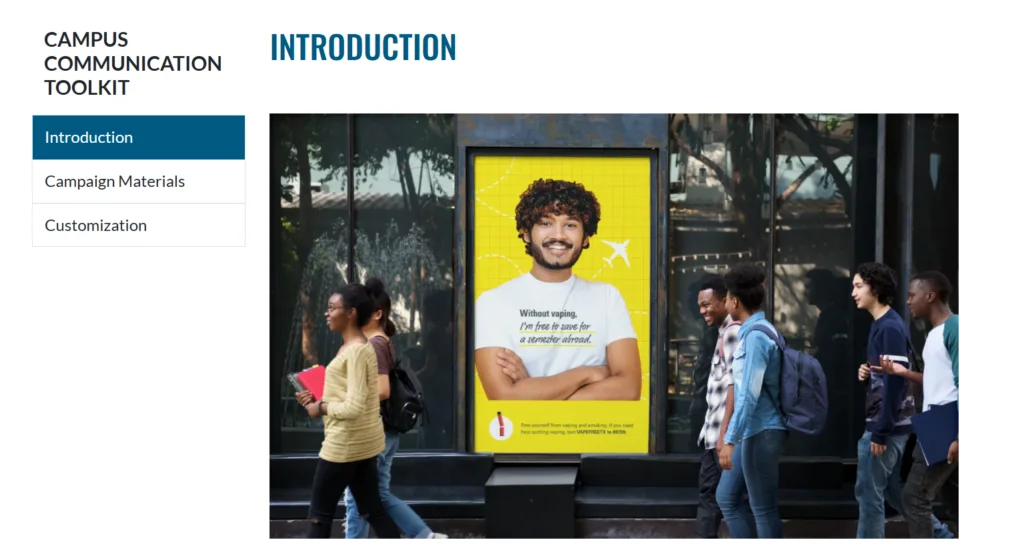
Missouri Partners in Prevention (PIP) has several resources available to assist campuses with their tobacco prevention and control efforts.
PIP has been funded by the Department of Health and Senior Services and the Department of Mental Health to address tobacco use among young people using a variety of evidence-based strategies such as the promotion to quit services and updating tobacco free campus policies. This includes toolkits, media playbooks and even sample tobacco free campus policy language. To learn more about these resources or to get in touch with our PIP staff member, please feel free to email Brittany Carpenter at bcndf@missouri.edu.
Scope
Missouri Data
Among Missouri college students at 4-year institutions, 25% report past year use of any tobacco/nicotine products.
The most commonly used tobacco/nicotine products that students report using in the past year are e-cigarettes at 19%, followed by cigarettes (13%), smokeless tobacco/nicotine including nicotine pouches (7.9%), cigars (4.0%) and hookah (1.2%)
Smokeless tobacco & nicotine products have been increasing in popularity, rising from 2.4% in 2022 to 7.9% in 2026.
67% of students report being exposed to secondhand smoke/vapor. They are exposed to secondhand smoke/vapor at the following locations:
Off-campus social gathering
65%
Bar or restaurant
55%
Outdoor public space
52%
In a car
38%
In one’s own living space
24%
In family’s living space
22%
In a college campus building
18%
64% of students indicate that they have wanted to quit or have quit tobacco/ nicotine since entering college.
When citing reasons for quitting use, students have said:
Don’t want a habit they’ll regret
52%
Potential of getting sick or developing a disease
45%
Products cost too much
34%
Tobacco/Nicotine Products
Many of us think of tobacco products as traditional cigarettes and other nicotine products that have long been on the market in the United States. While those products are still on the market and used by many Americans, new and novel products continue to pose a threat to public health and all the progress we have made regarding use rates over the last several years. We think it is important to highlight some of the newer products and educate our community on why it is still important to address tobacco use.
Comparing Products
Nicotine Pouches
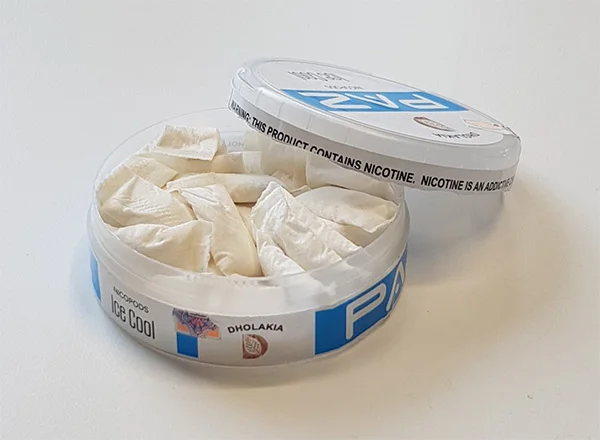
Nicotine pouches contain a powder made of nicotine, flavorings, and other ingredients. The powder dissolves in the mouth, and nicotine is absorbed through the gums and lining of the mouth. There is a lot of misinformation regarding this new products category, and we are seeing the industry target youth and young adults in the same way they have with other tobacco products in the past. For more information about these products, visit the CDC’s resource about nicotine pouches or Oral nicotine pouches from the Truth Initiative to learn more.
E-Cigarettes, Vapes, and Other Electronic Nicotine Delivery Systems
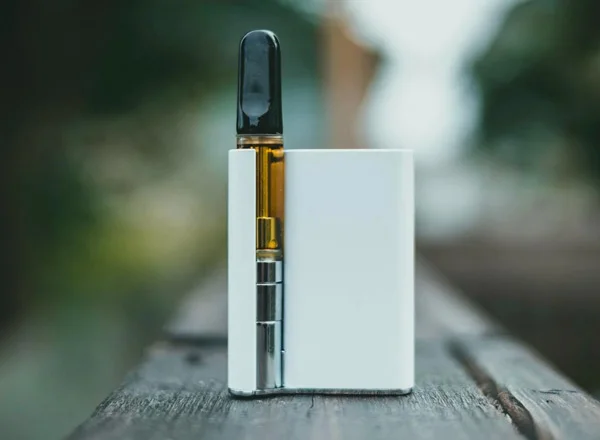
Vapes, vaporizers, vape pens, hookah pens, electronic cigarettes, e-cigars, and e-pipes are some of the many tobacco product terms used. These products use an “e-liquid” or pod-based system that usually contains nicotine derived from tobacco, as well as flavorings, propylene glycol, vegetable glycerin, and other ingredients. While we know more now about these products than when they first entered the market, there is still a lot that we do not know about the long-term health consequences of use.
To learn more about e-cigarettes, visit the FDA resource, the Truth Initiative and the American Heart Association for valuable information regarding these products.
Engage with Tobacco/Nicotine Retailers
Show Me Tobacco Education and Compliance Training for Tobacco and Nicotine Retailers
Looking to engage with local tobacco/nicotine retailers? These resources can help you engage with local businesses to encourage participation training to ensure they are aware of federal, state and local laws regarding sales of these products.
If you are looking to order items to promote Show Me, please use this link to view available promotional items and resources: Missouri Show Me Retailer Training Item Request (cognito)
- The Missouri Show Me Tobacco Retailer Training was developed to provide the information and tools necessary for retailers that sell tobacco and nicotine products to comply with the federal, state, and local laws.
- This program will highlight why the retail environment is an important place to help protect young people from addiction and disease while also gaining additional insight into the various agencies responsible for the regulation and enforcement of the tobacco industry.
- Owners, managers, and clerks of establishments that sell tobacco and nicotine products are strongly encouraged to take this brief, useful program.
- For more information and resources to support retailer education, please visit Show Me Tobacco.
- If you are looking to order items to promote Show Me, please use this link to view available promotional items and resources: Missouri Show Me Tobacco Retailer Training Item Request
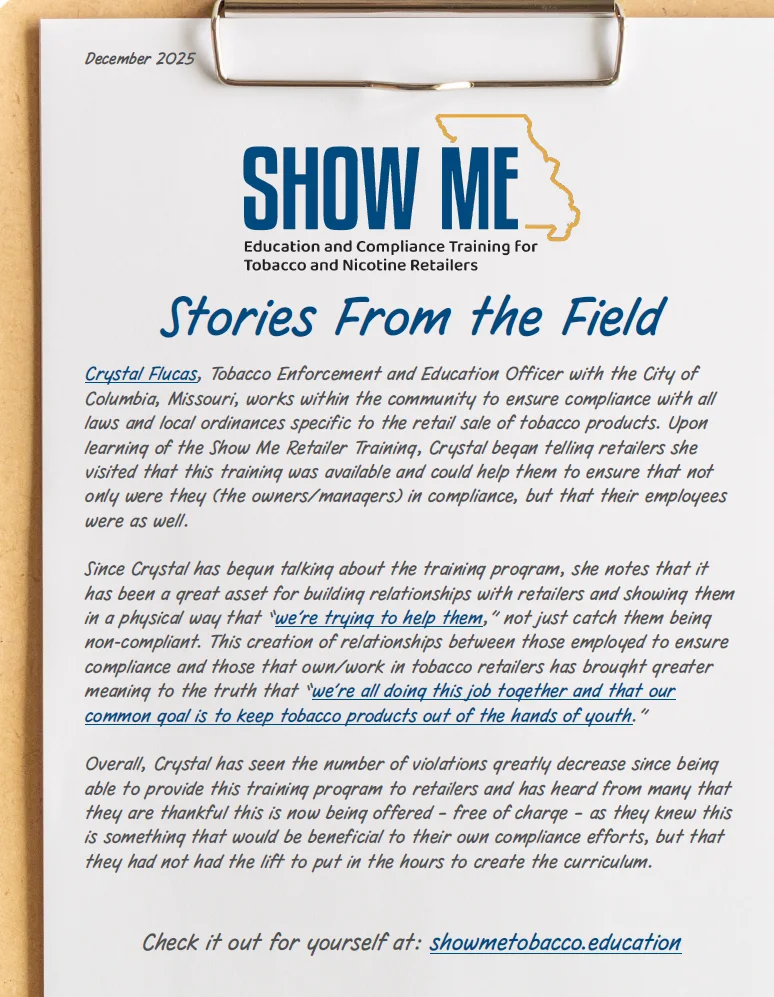
Stories from the Field
The Missouri Show Me Tobacco Retailer Training was developed through a partnership between Missouri Partners in Prevention and the Missouri Department of Health and Senior Services as a free program for owners, managers, and clerks of establishments that sell tobacco and nicotine products. It is meant to provide the necessary tools and information so that these individuals can be in compliance with federal, state, and local laws/ordinances.
This series will feature communities utilizing the program and share their experience promoting the training in their respective communities.
Missouri Higher Education Tobacco-Free Policies
In partnership with the Missouri Department of Health and Senior Services, PIP conducts annual reviews of tobacco-free policies from 62 higher education institutions in Missouri. Located below is information from the 2025 policy review conducted in July-August 2025.
Most institutions, n = 51, have a tobacco-free policy, and 11 do not. Of the 51 with policies, an assessment was conducted to determine the comprehensiveness of each institution’s policies, which were categorized into tiers 1-4. Tier 1 demonstrates model comprehensiveness:
- Tier 1: 5 institutions
- Tier 2: 16 institutions
- Tier 3: 13 institutions
- Tier 4: 17 institutions
Below are results from the 2025 policy assessment and demonstrates the percentage of the 51 policies that include an item versus not.
Eliminate Tobacco Use (ETU) Initiative
The University of Missouri is the coordinating partner for Eliminate Tobacco Use (ETU) Missouri. Participating institutions, which include the University of Missouri and Partners in Prevention, will meet at annual summits to learn and receive technical assistance to carry out action plans involving effective communication, policy compliance and education interventions.
Citations
- Smoking and tobacco. Institute for Health Metrics and Evaluation. (n.d.).
- Substance Abuse and Mental Health Services Administration. (2024). Key substance use and mental health indicators in the United States: Results from the 2023 National Survey on Drug Use and Health (HHS Publication No. PEP24-07-021, NSDUH Series H-59). Center for Behavioral Health Statistics and Quality, Substance Abuse and Mental Health Services Administration.
- Elflein, J. (2023, August 31). College students tobacco use by product U.S. 2020. Statista.


